The young man was hospitalized after being pen…See more
When 22-year-old Joven arrived at the emergency department late one evening, doctors immediately knew something was wrong. He was exhausted, shaken, and in visible distress — the kind that signals both physical pain and overwhelming fear. Medical staff acted quickly, stabilizing him as he winced with every breath. What happened to him was not clear in that moment, but one fact was: someone had harmed him, and he needed urgent care.
Early assessments showed internal injuries requiring close monitoring. Though serious, they were treatable. The bigger challenge — the one that would take far longer than any physical wound to heal — was the emotional shock that had left him feeling unsafe, disoriented, and unsure of what would come next.
For the first few hours, his only words were soft, almost whispered:
“I just want to go home.”
The Medical Response

Doctors and nurses worked steadily, focusing on stabilizing his injuries and easing his pain. As he began to relax, specialists joined the team — trauma counselors, psychologists, and patient advocates. Together, they formed a support network around him, knowing that harm of this nature affects both body and mind.
Hospital staff emphasized privacy and dignity. They explained every step — the scans, the treatments, the medication — making sure Joven understood he was no longer alone, and that he was safe.
One counselor later recalled,
“He needed reassurance just as much as medical treatment. Healing starts the moment someone tells you that you’re believed.”
The Beginning of an Investigation
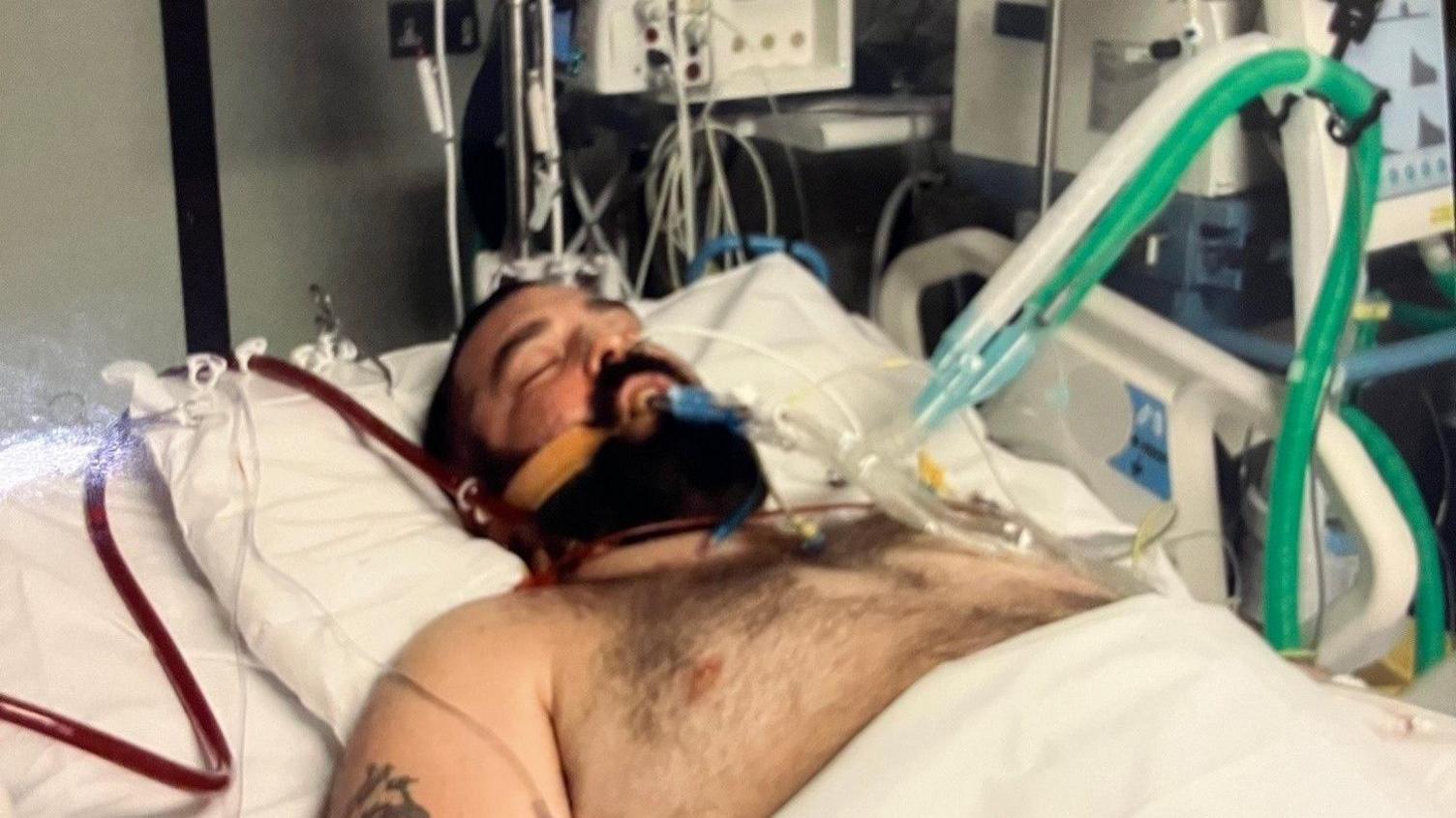
By the next morning, Joven was able to describe fragments of the events that led him to seek help. While the details remain confidential out of respect for his privacy, authorities confirmed that the harm came from another individual and involved behavior that violated both his boundaries and his safety.
Local police opened an inquiry immediately. Officers visited the hospital to speak with Joven in a calm, supportive environment, making sure he felt in control of the conversation. They gathered preliminary information and began searching for witnesses, camera footage, and individuals who might have knowledge of what happened.
A spokesperson for the police department stated:
“Our priority is ensuring the victim’s safety and well-being. The investigation will continue until we determine the full circumstances.”
A Family’s Fear — And Their Relief
For Joven’s family, the news was a storm of emotions. They rushed to the hospital, frightened by what they might find, but relieved to see him awake and speaking. Still, the worry on their faces was unmistakable. His mother held his hand every time a doctor stepped into the room, bracing herself for updates.
In a short statement, the family asked for privacy and thanked the community for the outpouring of concern. Behind closed doors, they focused entirely on helping Joven feel supported, loved, and protected.
His sister later said,
“The hardest part was seeing him so quiet. He’s usually the loudest voice in the room. We just wanted him to feel like himself again.”
The Emotional Aftermath
Situations like the one Joven faced often leave survivors grappling with confusion, fear, or guilt — even when they’ve done nothing wrong. Trauma specialists emphasized that emotional recovery is often more complex than treating physical injuries.
Counselors encouraged him to speak at his own pace. They helped him understand that healing is not a straight line — some days feel strong, others overwhelming. They reassured him that seeking help was an act of courage.
Over time, Joven began participating in short therapy sessions focused on grounding techniques, self-awareness, and rebuilding a sense of security. Slowly, he began to ask questions about recovery, coping, and next steps — small signs of resilience returning to him.
Support From the Community
When news of the incident spread, the community responded with compassion. Neighbors sent messages wishing him strength and healing. A local youth organization offered free counseling sessions for anyone affected by violence or harmful behavior. Teachers from his former school reached out, checking in on the family.
One message, from a former coach, read:
“You’re stronger than this moment. We’re all behind you.”
Although encouraging, the attention was also emotionally heavy for the family. They chose to keep most of their conversations private, focusing on surrounding Joven with steady support rather than letting the spotlight add pressure.
The Larger Conversation About Safety
While the investigation continued, local leaders used the moment to highlight the importance of:
-
recognizing warning signs
-
speaking up when feeling unsafe
-
offering support to survivors
-
emphasizing consent and boundaries in all interactions
Health professionals also used the opportunity to remind the public that no one should ever feel ashamed for seeking help, and that hospitals treat trauma patients with respect, privacy, and care.
A hospital representative noted:
“Early medical attention can prevent complications, and early emotional support can prevent long-term psychological harm.”
Joven’s Path Forward
As days turned into weeks, Joven made steady progress. His physical injuries began healing, and he gradually resumed simple routines — eating meals with his family, listening to music, watching basketball. These small steps carried enormous significance.
In therapy, he learned coping skills to manage anxiety and moments of fear. Counselors encouraged him to rebuild at his own pace, reminding him that recovery does not require perfection — only persistence.
One afternoon, after a counseling session, he told his mother:
“I think I’m ready to try again. I don’t want this to define me.”
It was the first time he had spoken with that level of clarity and strength since the incident.
The Investigation Continues
Police remain committed to understanding all aspects of the incident. They are gathering additional evidence, speaking with individuals connected to the case, and collaborating with legal authorities to ensure that Joven’s rights — and the truth — are protected.
Officials emphasized that they will proceed carefully and thoroughly, ensuring fairness while prioritizing the survivor’s safety.
A Message of Awareness and Hope
Joven’s story reflects a broader reality: harmful interactions can happen unexpectedly, even to those who feel prepared, cautious, or aware of their surroundings. His experience has sparked discussions about safety, awareness, communication, and support systems.
Yet, it also highlights something just as powerful: the strength of survivors, the importance of immediate care, and the impact of a community that chooses compassion over judgment.
For Joven, healing remains an ongoing journey — one filled with challenges, setbacks, and victories. But he is surrounded by family, counselors, medical staff, and a community determined to see him rise again.
And as he continues moving forward, he hopes his experience will encourage others to speak up when something feels wrong and to seek help without hesitation.
Sources
-
Trauma recovery guidelines from medical associations
-
Public health resources on survivor support
-
Counseling frameworks for emotional healing
-
Hospital best practices in trauma care
-
Research on community support and recovery outcomes
I ended up in hospital after the first time I had s3x

My knuckles were white as I gripped the hospital bed rail.
Then tears slipped down my face as my best friend and a nurse held my legs apart, while another nurse inserted gauze into my vagina to try and stop the bleeding.
Everyone always says you’ll remember the first time you have sex, but I’d thought it would be because of how awkward it would be. My first time featured a blood-stained bed, carpet, bathtub and three different hospital rooms.
So after my disastrous first time, I want to make sure others don’t have to go through the same thing – and that starts with this cautionary tale and a call for better sex education for all.
I was in my late teens when I first had sex with a boy I was dating at the time.
On that fateful day, he’d booked a hotel room but it never even crossed my mind that I’d lose my virginity. Needless to say, I was completely unprepared for it.
Even before we got to the room, I was nervous to the point of feeling nauseous. He made me feel too anxious and jittery. I didn’t know how to behave or what to even say around him – I felt awkward.
As we got down to it, there was no foreplay for me and he didn’t touch me anywhere other than my chest. Looking back, I should’ve seen this could cause issues.
It felt like a piercing pain when he put it in and I remember thinking that something was wrong, but I didn’t know what. He asked if I was on my period and I said no.
At the sight of the blood, panic flooded my system – I felt scared and anxious. It looked completely different to period blood, in the sense that it was more fresh and looked like it was never-ending.
He asked: ‘Why are you bleeding so much?’
I didn’t know the answer. I felt shaken.
There was pain and there was blood, but the blood made the room look like a crime scene. It spilled everywhere in a gushing waterfall, staining through the bedspread and into the mattress, down the sides of the bed frame and onto the carpet.
After the bleeding started and we stopped having sex, I started using sanitary pads to try to stop the bleeding. When I got through six of them, I decided to call 111 and they asked if the sex was consensual and to describe the events that led up to it.
They told me to go to the nearest walk-in centre. At this point, I’d nearly fainted once and felt dizzy, like my entire body was experiencing pins and needles. My mouth was so dry. All I could think was that my family would kill me.
We went to the local walk-in centre – where they told me I had to go to A&E, I almost passed out, breaking my phone screen when it slipped out of my hand, as they didn’t have the equipment to find out what was wrong.
I ended up telling a nurse that I didn’t want my parents knowing I’d had sex because I wasn’t supposed to be having it
On the way there, alone, I nearly fainted again in the Uber – the driver had to pull over and get me a packet of cereal bars and a bottle of water, which helped. While in the waiting room, I’d managed to contact my best friend and by the time I’d been taken into one of the wards for serious injuries, she’d arrived.
When I arrived at A&E – about an hour and a half after the bleeding first started – I saw two gynaecologists and a revolving door of nurses – all women. One of the medical staff told me that if the bleeding didn’t stop by the next day, I would have to go into surgery.
‘You have a tear on both your vaginal walls,’ someone said to me after using a cystoscope to try to figure out what was wrong. They said it could’ve happened because the penetration was too rough or even because I wasn’t ready or turned on. After that, they all settled on using gauze to stop the bleeding.
By this point, I’d been bleeding for more than three hours and soaked through more than 10 sanitary pads even when two were used together. I find it oddly hilarious that I hadn’t got a drop of blood on my jeans.
One of the nurses helped me put on a pair of disposable maternity-style briefs and on the end of the bed, I spotted the red and black silk and lace thong I’d bought specially from Ann Summers. Fat lot of good it’s done me, I thought.
I felt everything from panic and shock to amusement at everything that was unfolding. I ended up telling a nurse that I didn’t want my parents knowing I’d had sex because I wasn’t supposed to be having it.
I had my mother’s words ringing in my ears that I shouldn’t be having sex because it’s a taboo in our South Asian culture. We’re taught never to do it with anyone because it’s all boys – or men – want and once they get it, they leave.
‘They’ll make you all these promises,’ my mum told me in Bangla when I was 15. ‘They will tell you they love you or will marry you, so you have sex with them. But once you do, they will break every promise and leave.’
I went to sleep that night in the hospital feeling sick and frustrated. I also hadn’t been able to keep any food down and I couldn’t sleep either.
Every two to three hours, a nurse would check my blood pressure, do a blood test and take my temperature. I also had a catheter attached, which was extremely uncomfortable.
The next day in hospital, I spoke to a gynaecologist and told her I never want to have sex again. She laughed and said this isn’t how sex was supposed to be. ‘When you’re ready, it’ll be so much better,’ she assured me. I felt wary but nodded anyway.
It is important for young women to understand that first time sex is definitely not meant to be inherently painful and not everyone bleeds
I ended up staying in the hospital for two nights and the bleeding stopped the day after I was admitted – some time after eating lunch and throwing up a few times.
That night, they took the gauze out, which hurt almost as much as when they put it in. I was discharged the next day but because I’d told my parents I was staying at a friend’s house, I just went home and couldn’t really talk about it with them – or anyone in the family.
In conversations with friends afterwards, one of them told me that the first time she had sex, all she felt was just wetness everywhere and that it hurt. Another friend told me her first time really hurt too and she cried.
In a lot of ways, this experience taught me about the importance of foreplay and being turned on and of feeling comfortable during sex. It is really important to feel comfortable, relaxed and aroused, otherwise the whole thing can be an utter disaster.
A survey of over 3,000 women showed that one-third were not ready for their first time having sex, and 22% said they wish they waited. Sadly, over 51% of these women said their first time having sex hurt, and half said they were really nervous or scared beforehand.
There needs to be a lot more discussion around sex – especially first time sex – and the pressures attached to it, particularly for young girls. A lot of schools focus on abstinence and using protection to prevent STIs instead of using a pleasure-led sex education, which is hugely necessary for teens hitting puberty and exploring their sexuality.
Had this been the case, I think I would’ve felt a lot more comfortable and been able to know my own body better. I would’ve felt confident enough to tell him what to do or what I liked, instead of thinking that sex was more for him and his pleasure or that first time sex was tied up with pain.
It is important for young women to understand that first time sex is definitely not meant to be inherently painful and not everyone bleeds.
I did because I believe I wasn’t properly comfortable or aroused. I was too in my head, anxious and nervous.
For a whole year, I didn’t have sex with anyone because I wanted to let my body heal and let myself get over him completely.
The second time I had sex it genuinely felt like it was the first time – but instead of it being painful, it felt more like an uncomfortable stretching, like a muscle that’s never been used before actually being used.
Sex now is a billion times better. Instead of being something that fills me with trepidation and nerves, it makes me happy and is exciting.
If I could go back and give my younger self some advice, I’d tell her not to do it with that guy and to wait until she was completely ready.
Far too often, us girls go through the motions and put someone else above our own desires or wants, when really we have to be selfish enough to demand our pleasure and have our needs met.
Do you have a story you’d like to share? Get in touch by emailing james.besanvalle@metro.co.uk.